
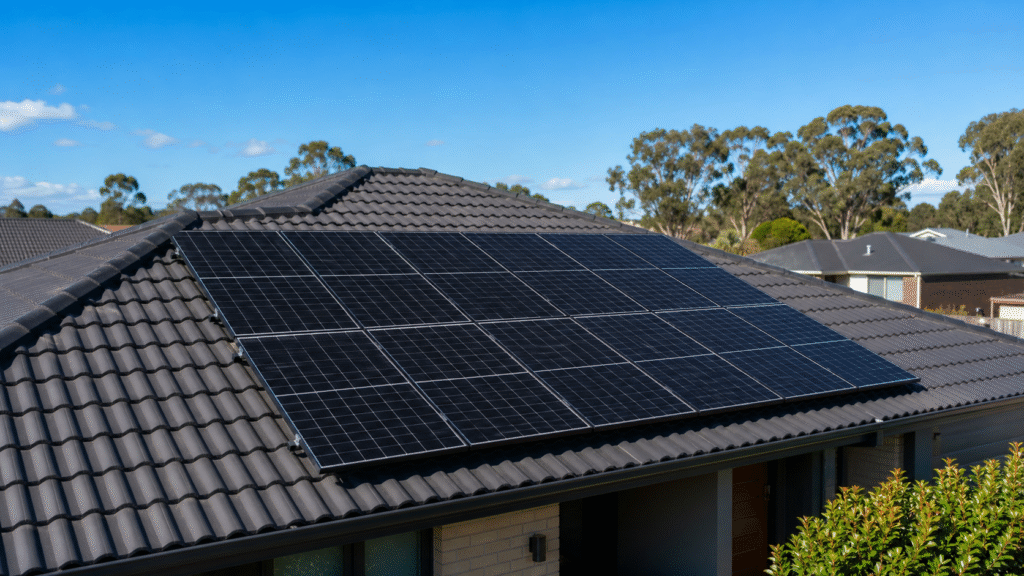
Your solar panels are sitting on the roof. The sun is shining. And your power bill is still $300.
If this sounds familiar, you are not alone. It is one of the most common concerns we hear from NSW homeowners — and in most cases, there is a specific, fixable reason behind it.
We have been installing solar systems across NSW since 2014, and these are the 7 problems we see most often when a system is not performing the way it should.
Why Is My Solar System Not Producing?
Before assuming something is seriously wrong, it is worth working through this list from the top. The most common causes are also the easiest to fix — and many homeowners solve the problem themselves in under 20 minutes.
Reason 1: Your Inverter Has Tripped or Gone Into Fault Mode
This is the most common cause of solar underperformance across all the systems we service in NSW.
Your inverter is the brain of your solar system. It converts the DC power your panels generate into usable AC electricity for your home. When the inverter trips or enters fault mode, everything stops — no production, no monitoring data, nothing.
How to check: Locate your inverter — it is usually mounted in your garage, on an exterior wall, or near your meter box. During daylight hours it should be running quietly with a green or white status light. If you see any of the following, your inverter has likely tripped or faulted:
- A red LED fault light
- An error code showing on the display screen
- The inverter is completely dark and silent
- The display shows zero production despite clear weather
Many inverters will attempt to reset themselves overnight and resume normal operation the following morning. If the fault clears on its own and does not return, you may not need to do anything further.
However, if the fault code keeps reappearing — even after the inverter resets — that is a sign of a deeper issue that requires a professional inspection. Common causes include grid instability, internal component failure, or an underlying wiring issue.
What to do: Check your inverter now. If it is showing a fault code, note the code and contact our team at rescomsolar.com.au. We service solar systems across NSW and can advise you on next steps based on your specific inverter brand and fault.
Reason 2: Your Monitoring App Is Showing Old Data
This one catches a lot of people off guard — and it has caused unnecessary worry for many of our customers.
Your solar monitoring app relies on a WiFi connection to pull live data from your inverter. If the inverter’s WiFi module loses its connection to your home network, the app stops receiving updates. It simply displays the last data it received — which could be hours or even days old.
This means your system could be generating perfectly normal amounts of power while your app shows zero or near-zero production. The system is fine. The connection is not.
How to check: Open your monitoring app and look for a “last updated” or “last sync” timestamp. If it shows anything longer than a few hours ago during daylight, your app has lost its connection to the inverter — not your solar system.
How to fix it: Locate the WiFi dongle or communication module plugged into the side or back of your inverter. Hold down the reset button (usually a small pinhole button) for 10 seconds. Release it and allow the device to restart and reconnect to your network. In most cases, live data returns within 15 to 20 minutes.
If the WiFi module keeps dropping out repeatedly, the module itself may need replacement. Contact our team at rescomsolar.com.au and we can assess whether a replacement module is required.
Reason 3: Shading Is Reducing Your Output
Shading is one of the most underestimated causes of solar underperformance — particularly in NSW, where the sun angle changes significantly between summer and winter.
A tree or structure that casts no shade on your panels during summer can throw significant shade across multiple panels during winter mornings, because the sun sits much lower in the sky between May and August. Even partial shading on a single panel can reduce the output of every other panel in the same string.
What to look for: Go outside on a clear day at around 10am and observe your rooftop. Look for anything that may be casting a shadow across any part of your solar array, including:
- Tree branches that have grown since installation
- A neighbour’s extension or new structure
- A TV antenna, satellite dish, or new rooftop addition
- Your own chimney or roof elements at certain sun angles
What to do: If shading from a tree is the issue, trimming the relevant branches is often all that is required. For more complex shading situations — structural obstructions or panels in a difficult position — the solution may involve adding power optimisers to individual panels, which allow each panel to perform independently rather than being dragged down by one shaded unit.
Contact our team at rescomsolar.com.au to discuss the best shading solution for your specific roof layout.
Reason 4: Your Solar Panels Are Dirty
This is the cause that surprises most people — because it sounds almost too simple. But soiling is a genuine and measurable source of lost solar production.
Dust, bird droppings, pollen, and airborne pollution accumulate on the glass surface of your panels over time. This layer of grime blocks sunlight from reaching the photovoltaic cells underneath. Research consistently shows that dirty panels can lose between 10 and 25 percent of their rated output, depending on the severity of the soiling.
In NSW, this issue is particularly noticeable during dry periods. Without rain to naturally rinse the panels, buildup accumulates across weeks or months. Areas near construction sites, farmland, or industrial zones can see even faster accumulation.
How to check: Look up at your panels from the ground. If they appear dull, grey, or have visible bird droppings across the surface, soiling is likely contributing to your reduced production.
How to clean them: For light dust accumulation, a gentle rinse with a standard garden hose from ground level is sufficient. Do not use a pressure washer — the high-pressure water can damage panel frames, seals, and wiring. Do not use abrasive cloths or cleaning chemicals that are not approved for solar panels.
We recommend arranging a professional panel clean every one to two years as part of your regular solar maintenance routine. Professional cleaning ensures your panels are cleaned thoroughly and safely, without the risk of damage or injury from roof access.
Do not attempt to clean panels by accessing your roof yourself. Working at height carries serious safety risks and is best left to trained professionals.
Reason 5: A Faulty Panel in the String
Solar panels are typically wired together in groups called strings. When a single panel in a string develops a fault — whether from physical damage, cell degradation, delamination, or a manufacturing defect — it can act as a bottleneck and restrict the output of every other panel connected to it in the same string.
This is different from a sudden drop in production. A faulty panel usually causes a gradual, progressive decline in output over weeks or months — making it harder to notice until the underperformance becomes significant.
Signs that point to a faulty panel:
in production over several months — not a sudden drop
than it was in the same season last year
cracked, or showing dark spots when viewed from the ground
- Your monitoring data shows a slow, steady decline
- Your output on sunny days is consistently lower
- Some panels look visually different — discoloured,
What to do: Diagnosing a faulty panel requires professional testing equipment. A qualified technician will inspect your system and identify the underperforming unit.
If your panels are still within their product warranty period — most quality panels carry a product warranty of 10 to 25 years — a replacement may be covered at no cost to you. Contact our team at rescomsolar.com.au to arrange an inspection and we will advise you on warranty coverage for your specific panel brand.
Reason 6: Grid Voltage Is Too High
This is one of the least understood causes of solar underperformance — but it is a genuine and growing issue in many NSW suburbs, particularly in areas with high concentrations of rooftop solar systems.
Here is how it works. When a large number of homes in the same street or area are all exporting solar power to the grid at the same time — typically between 10am and 2pm on sunny days — the local grid voltage rises. When it exceeds the legal upper limit, your inverter is required by Australian standards to reduce its output or shut down entirely, in order to protect the stability and safety of the local grid.
How to recognise this issue: The pattern is distinctive. Your system produces well in the early morning. Then, around mid-morning, output drops sharply or stops entirely — even on a perfectly clear day. In the late afternoon, when neighbouring systems reduce their export, production recovers.
This is a network infrastructure issue, not a fault with your solar system or inverter.
What to do: You have two options. First, contact your electricity distributor — Ausgrid, Endeavour Energy, or Essential Energy depending on your area — and log a formal complaint about high voltage. Request a voltage assessment at your property. Distributors are obligated to investigate.
Second, contact our team at rescomsolar.com.au. Some inverters allow a voltage set-point adjustment that can help manage this issue. We can review your inverter settings and advise on the best course of action for your specific situation.
Reason 7: Your System Is Clipping
Inverter clipping is not a fault. It is a feature of how many solar systems are intentionally designed — but if nobody explained it to you when your system was installed, it can look exactly like underperformance.
Clipping occurs when your solar panels are capable of generating more power than your inverter is rated to convert. For example, a system with a 10kW panel array paired with a 6.6kW inverter will produce 6.6kW at maximum — and any additional power the panels could generate beyond that ceiling is clipped, or discarded.
This is a deliberate design decision made at the time of installation, not an error. Oversizing the panel array relative to the inverter is a common practice in Australia. It allows the system to hit the inverter’s maximum output earlier in the morning and maintain it later in the afternoon, rather than only hitting peak production at midday. The overall energy yield across the day is typically higher than a matched system — even though the peak output is capped.
How to tell if your system is clipping: Look at your monitoring app on a clear, sunny day. If your production graph shows a distinctive flat top — where output climbs in the morning, holds at a constant plateau for several hours, then declines in the afternoon — your system is clipping during that plateau.
Check your original quote or contract. Compare the total panel capacity in kilowatts against the inverter’s rated capacity. If the panels exceed the inverter by more than 10 to 20 percent, clipping is by design.
If you are unsure whether what you are seeing is normal clipping behaviour or something else, contact our team at rescomsolar.com.au and we can review your system specifications and monitoring data for you.
Solar System Fault Diagnostic Checklist
Use this checklist to work through the most likely causes before calling an installer. Start at the top and work your way down:
Step 1 — Check your inverter
daylight, note any fault code displayed.
- Is the status light green? If red or off during
Step 2 — Check your monitoring app
ago during daylight, reset the WiFi dongle on your inverter.
- When was data last updated? If more than 2 hours
Step 3 — Check for shading
casting a shadow on any panel?
- Go outside at 10am on a clear day. Is anything
Step 4 — Check panel cleanliness
bird droppings? When were they last cleaned or rinsed?
- Are panels visibly dirty, dusty, or marked with
Step 5 — Check production history
for the last 30 days. Is the decline sudden or gradual?
- Open your monitoring app and look at production
Step 6 — Check for mid-day dropouts
on sunny days then recover later? This points to a grid voltage issue.
- Does production drop sharply between 10am and 2pm
Step 7 — Check your system specifications
panel capacity significantly exceed your inverter rating? If yes, clipping is likely normal behaviour.
- Look at your original quote or contract. Does your
If you have worked through all 7 steps and are still unsure what is causing your reduced production, it is time to get a professional involved.
Get a Free Quote From Rescom Solar
We have been helping NSW homeowners get the most out of their solar systems since 2014. Whether you need a system inspection, a WiFi module replacement, a panel clean, or advice on an inverter fault — our team is here to help.
Contact us today for a free quote:
- Website: rescomsolar.com.au
- Phone: 1300 128 747
- Email: info@rescomsolar.com.au
We service Greater Sydney, Hunter Valley, Central Coast, and all of Regional NSW.
Watch the Full Video
For a complete walkthrough of all 7 reasons, watch the YouTube video shown near the top of this article. We cover each cause in detail with practical advice on what to check and when to call a professional.